Why a Pause Can Change the Meaning of a Line
Why a pause can change the meaning of a line: hear how timing, emphasis and a reply shape an exchange, with a listening exercise for live readings.

At a reading, an actor says, “I thought you were coming,” then waits. The silence might sound hurt, hopeful or accusing; the words have not changed, but the pause gives the audience time to decide what they mean. Why a pause can change the meaning of a line is a practical question for actors and listeners alike: what happens before and after the words can be as expressive as the words themselves.
A pause is not simply empty time. Its effect depends on the thought that precedes it, the pressure placed on a particular word and the response that follows. When a line feels flat, confusing or too heavily acted, timing may be part of the problem. Identify what the silence is doing, then adjust one element at a time.
A pause feels empty when the thought has stopped
A silence can lose its force if the actor appears to have finished thinking. The body settles, the gaze wanders, or the breath becomes unrelated to the next line. The audience receives no sign that anything remains at stake, so the pause feels like a gap between pieces of dialogue rather than part of the action.
This often happens when an actor treats punctuation as a stopping instruction. A full stop may mark the end of a sentence, but the character’s attention could still be active: weighing a reply, watching another person or deciding whether to continue. The pause needs an object of attention, even if that object is a thought the character is trying not to reveal.
Give the silence a clear task. The character might be listening for an answer, holding back an apology or noticing that the other person has not looked up. Keep the task specific enough to guide attention, but do not add a visible gesture merely to prove that something is happening.
At your next read-through, decide what the character is attending to during the silence before changing its length.
A pause placed too early can break the sentence
When an actor stops in the wrong place, listeners may hear a change in meaning that the scene does not support. A break between a subject and its verb, for instance, can make the first part sound like a separate thought. That may be useful if the character is interrupted by doubt, but confusing if the line is meant to arrive as one clear statement.
Read the line aloud once without a pause, then mark where a breath or interruption might sharpen the thought. Listen for the words that belong together. In “I never said he took it,” the emphasis on “never” differs from emphasis on “he”; a pause before either word can make that contrast more pronounced, but it can also make the delivery sound laboured.
Do not choose a pause just because the sentence contains a comma. Ask what the listener should understand before the next thought arrives. If there is no change in attention, intention or relationship, a continuous line may be clearer.
Emphasis can make a pause sound like a verdict
A stressed word can give the silence after it a particular direction. “You knew” followed by a pause may sound like an accusation awaiting defence; stressing “knew” can imply that the speaker is challenging the other person’s claim of ignorance. The silence is heard through the emphasis that came before it.
Actors sometimes underline too many words, leaving no clear centre for the thought. If every phrase is forceful, the audience has little help deciding what matters. Choose one word to carry the main pressure, then let the pause after it reveal what the character expects from the listener: a confession, a denial, a change of subject or nothing at all.
Imagine a reader preparing the line “I said you could leave.” If the stress falls on “you”, the line may sound like a correction; if it falls on “leave”, it may feel like permission being withdrawn or granted with reluctance. The reader can try each version and listen for which one fits the exchange that follows, rather than selecting the most dramatic sound.
Make one word carry the thought before adding extra silence.
The reply after a pause may be doing the real work
A silence is often interpreted retrospectively. The next line can make the preceding pause seem like hesitation, a warning or an invitation. If the response arrives too quickly, it may close off an uncertainty that the scene needs; if it arrives after an unexplained delay, the listener may search for a reason that is not present.
Read the exchange as a whole, including the other character’s first reaction. Notice whether the reply answers the words, evades them or responds to what was left unsaid. Then adjust the silence so the audience has time to register that shift without losing the thread of the conversation.
In rehearsal, the listener’s behaviour can help locate the pause. A character may answer while still looking at a letter, or only after meeting the speaker’s eyes. The difference is not a general rule about eye contact; it is a choice about when the character is ready to engage. Avoid adding a look simply to decorate the delay.
Questions about pauses in a line
How long should a pause last?
Let the thought or reaction register, but avoid leaving the audience to invent an unrelated event to explain the silence. In a live reading, notice whether the reply seems to arrive before the preceding line has landed or after the exchange has lost its thread.
Should an actor follow punctuation?
Punctuation can suggest the shape of a sentence, but it does not dictate every breath or silence. Let the character’s thought and the listener’s ability to follow the line guide the timing.
Can a pause change a line’s emotion?
Yes, because it changes what seems to be at stake between the words. The same sentence may sound cautious before an answer, wounded after a refusal or teasing when the speaker waits for recognition.
What should you listen for in a pause?
Listen for the thought that seems to occupy the silence and for the first word or action that ends it. Ask whether the reply answers the spoken line, resists it or responds to something left unsaid; that shift helps reveal what the pause has made the audience expect.
What if the pause feels false?
Return to the moment before it and identify what the character has just noticed or decided. If there is no playable reason for stopping, try the line without the pause and see whether the exchange becomes easier to follow.
A live listening exercise can track the pause without replaying it
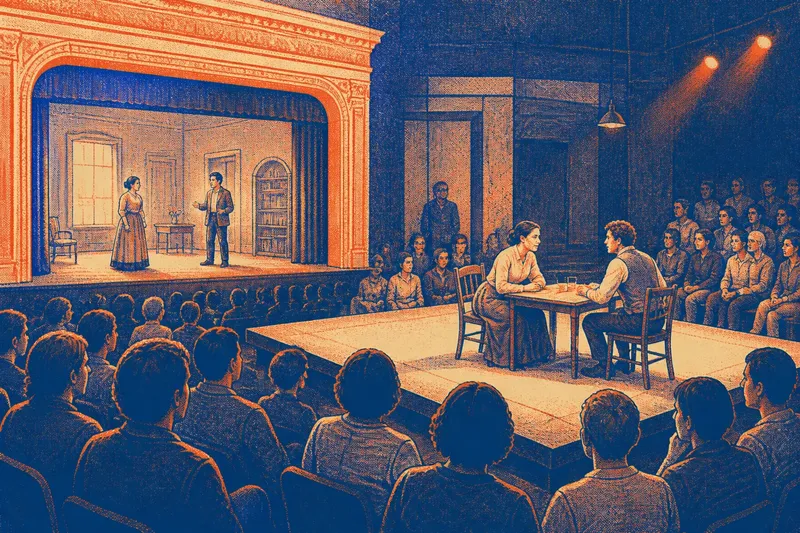
At a live reading or performance, you cannot ask the scene to repeat itself on demand. Instead, use a small paper note or programme and listen to the exchange in real time. Choose one brief moment in which a character speaks and another responds; do not try to record every beat.
Before the exchange, write the speaker’s last few words and leave a blank beside them. As the pause unfolds, make a simple mark when you think the speaker’s thought has landed, then another when the reply begins. This records your perception in the moment rather than pretending to measure the silence objectively.
After the exchange, note what you expected during the gap and whether the reply met that expectation. If you miss the moment or cannot make a mark without losing the scene, listen without writing and recall the exchange afterwards: what seemed to be at stake, and what did the first word of the reply do with it?
Imagine you are at a live reading and hear, “I thought you were coming,” followed by a pause and “I was.” You write the final words of the first line on your programme, mark when the silence begins to feel expectant, then note that the reply starts before you have decided whether the speaker sounds hurt. The observable result is not a timing figure but a clear note: the reply leaves the accusation unresolved. That gives you a specific interpretation to compare with the next exchange, without requiring the performers to repeat the line.
This exercise is a way to notice your own expectation, not a verdict on how the scene ought to be played.
When a pause sounds overworked, remove one signal
A pause can feel artificial when several signs of significance arrive together: an emphatic word, a fixed stare, a dramatic breath and a long silence. Each may be defensible alone, but combined they can tell the audience what to feel before the exchange has earned it.
Keep the clearest signal and take away another. If the emphasis already makes the accusation plain, the actor may not need to hold the listener’s gaze as well. If the silence is doing the work, a smaller vocal stress may leave more room for the audience to interpret what follows.
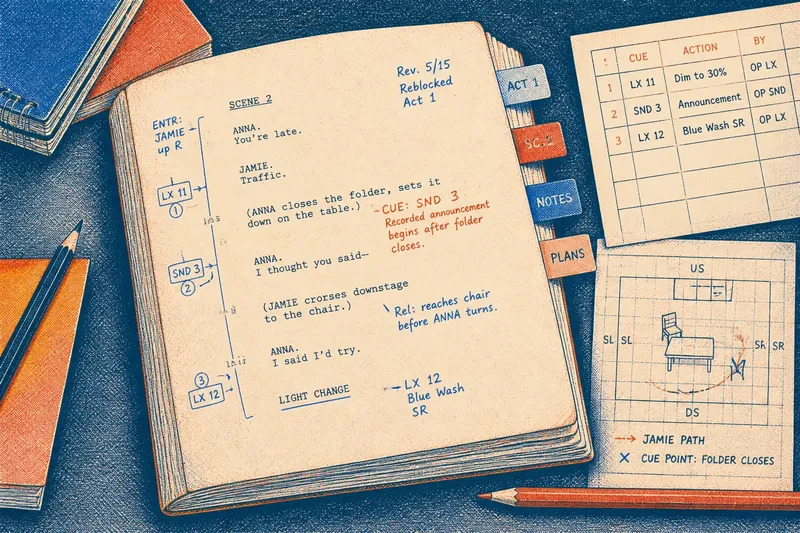
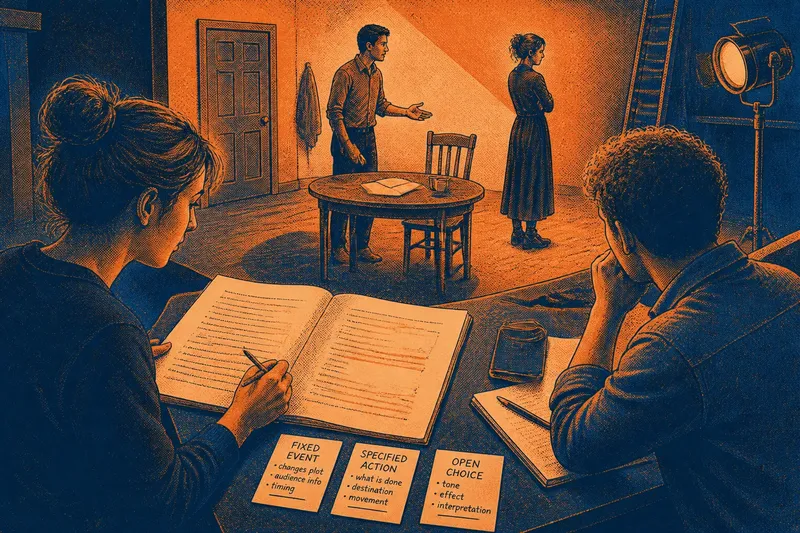
For a written script, distinguish between a pause the scene needs and a pause one performer happens to prefer. If the timing changes a reveal, a joke’s turn or the other character’s opportunity to respond, make that relationship clear through the surrounding dialogue or a concise direction. If the silence is open to interpretation, leave room for actors to discover its shape in rehearsal.
Why a pause can change the meaning of a line becomes clearer when you listen beyond its duration. Attend to the thought that enters the silence, the word that gives it weight and the response that releases or alters it. In rehearsal, adjust one of those elements at a time; the most telling pause may be the one that lets the audience hear a thought arriving rather than a performer waiting to speak.